A First Morning in an Unfamiliar City, Without Rushing
A first morning in an unfamiliar city can reveal how local cafés, markets and streets work, so you can join everyday routines with confidence and courtesy.
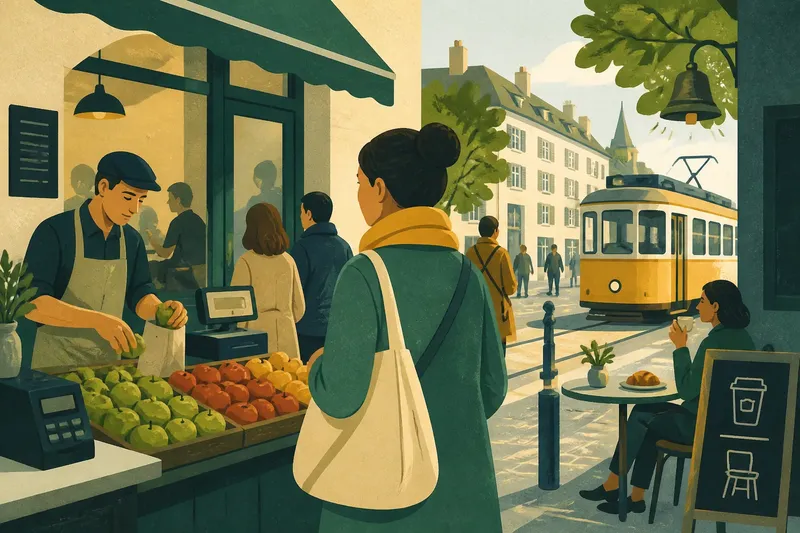
The bakery queue turns towards the door while a tram bell rings outside. On a first morning in an unfamiliar city, these small cues can help you take part in local routines without guessing at every custom. Start with one ordinary exchange and pay attention to how people use the place.
Read the queue before joining it
At a bakery or café, pause for a moment where you will not block the entrance. Notice whether customers wait in one line, take a numbered ticket or approach the counter when it is free. Also look for signs that separate takeaway orders from table service.
If the pattern is unclear, follow the person ahead or ask a brief question. A friendly greeting and a little patience are more useful than pretending to know the routine. Keep your phone and payment ready once you reach the counter, then move aside after ordering if others are waiting.
Notice how cafés and markets handle service
Service habits can change from one business to the next. In a café, customers may order at the till, wait for a server or collect their own drinks. At a market, vendors may invite customers to point, ask for a quantity or let the seller choose and pack the goods.
Watch before handling food or goods. If you are unsure whether customers may pick up fruit or bread, ask the vendor first. Customs vary, so treat the cues in front of you as more useful than assumptions based on another place.
Imagine you stop at a fictional market stall where customers are waiting beside a counter and the apples are behind it. You watch one customer ask for fruit, then say a simple greeting and point to the apples when it is your turn. The vendor selects and bags them; you pay at the till beside the stall, having avoided touching produce or cutting across the queue.
Choose a small purchase that fits the moment
A pastry, piece of fruit or local newspaper can make an everyday interaction easier to notice. Choose something you can carry comfortably, and check whether the shop welcomes customers who plan to sit and linger. In a busy place, a quick purchase may suit the flow better than occupying a table.
Use a greeting, a thank-you and a clear gesture if you do not know the words for an item. Pointing to a menu or display can be simpler than attempting an unfamiliar pronunciation. Keep the exchange brief if the person serving is busy, and do not treat a worker’s attention as an invitation to ask for a long list of recommendations.
Observe local rhythms with courtesy
Notice how people move through shared spaces. A tram stop may fill and clear in waves; a square may be used by people on a short break, families or commuters passing through. These patterns help explain when it is appropriate to pause and where you can stand without getting in someone’s way.
Keep doorways and pavements clear, especially when checking a map. Avoid photographing people who have not agreed to be photographed. Paying attention to the flow is both considerate and a practical way to understand how a street works.
Sounds and other sensory details can also help you recognise a place again. A crossing signal, the shade beneath a row of trees or the smell of bread near a corner may be easier to remember than a list of street names.
Ask one question that fits the setting
If you want local advice, choose a short question that someone can answer quickly. Asking whether a park entrance is along the same street is easier to handle than requesting a full itinerary from a person serving a queue. A sign, map or translation app can help clarify the answer.
For directions, check that you have understood before setting off. Repeat the place name or point to it on a map, then thank the person. If the person seems occupied or cannot help, accept that and consult another source rather than pressing.
How can you take part in local routines respectfully?
What should you do if you cannot tell where the queue starts?
Watch where the next customer joins, then ask politely if the line is not clear. If there is a ticket machine or a sign, use that system rather than forming a separate queue.
Is it all right to take photographs at a market?
Check for signs and ask before photographing a vendor or customer. If someone declines or looks uncomfortable, put the camera away and enjoy the scene without a picture.
How can you order when you do not know the local words?
Use a greeting, point to the item on a menu or display, and keep your request simple. If an option is unclear, show the item or ask the server to indicate it rather than guessing.
Should you follow the customs you know from home?
Do not assume the same practice applies in every business or city. Observe what other customers do, look for posted instructions and ask when a small uncertainty could affect the exchange.
For a first morning in an unfamiliar city, remember one useful cue from an everyday encounter: where the queue begins, how a market stall serves customers or where it is polite to wait. A brief note in your phone can help you recognise the routine next time, while leaving room to notice when a different place does things differently.