Rail, Foot and Ferry: Choosing a Pace for a Short Escape
Rail, foot and ferry travel each shape a short escape differently. Match the mode to your available time, energy and appetite for unhurried moments.
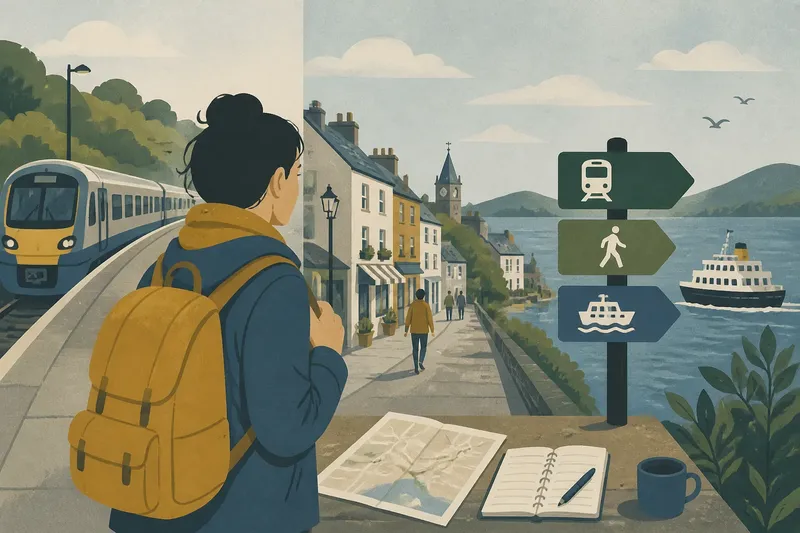
Rail, foot and ferry travel ask for different kinds of attention. Imagine you have a free weekend, a small bag and a choice between a train to a compact town, a long walk through its lanes or a ferry crossing that turns the journey into part of the day. The destination matters, but so does the pace you want to inhabit once you arrive.
Here is an invented situation to make the choice concrete. Mina has a free Saturday and Sunday, starting from a large city, and is considering a fictional coastal town called Bellhaven. A train runs there, footpaths connect its station with the waterfront, and a passenger ferry crosses to a nearby island. She wants sea air and time to wander, but not a weekend spent watching departure boards.
Rather than treating every mode as a box to tick, Mina can ask what each one does to the shape of her day. Rail gives her a defined passage between places. Walking makes distance intimate and adjustable. A ferry introduces a crossing with its own timetable, weather exposure and view. The best short escape may use one mode as its backbone and the others selectively.
Start with the hours you can actually use
A short trip has two clocks: the time away from home and the usable time at the destination. A journey can look brief on a route map yet consume a substantial part of a weekend if it involves a distant station, a change of trains or a long wait for a connection. Conversely, a longer ride may feel easy if it is direct and drops you close to the centre.
Mina begins by marking the edges of her available time. She checks the outward and return services, including when she would need to leave her accommodation to catch each one. She also notes the walk from the station to the place she hopes to stay. This prevents the tempting but misleading calculation that counts only the train’s scheduled running time.
For rail, the useful questions are about the whole chain: how she reaches the departure station, whether a transfer is needed, and how much breathing room the return requires. A direct train can create a calm beginning even if it is not the fastest option on paper. A change may be perfectly manageable, but it asks for attention and can make a tight return feel more brittle.
Walking has a different clock. The time on a sign may not include pauses to read a map, look for a turning or stop at a bakery. A route through narrow streets may cover little ground while offering plenty to notice; a waterside path may seem simple but feel exposed in wind or rain. Mina should choose a walk that leaves room for the ordinary interruptions that make a day pleasant rather than rushed.
The ferry adds a fixed departure to the picture. Its timetable may set the day’s rhythm more firmly than the distance suggests. Mina checks the crossing times before making it the centrepiece, then asks whether the return sailing leaves enough time on the island for a relaxed visit. If missing the last practical sailing would leave her stranded or scrambling, that crossing may not suit this particular weekend.
Let rail carry the long stretch
Rail often works well as the main transport for a short escape because it can move the traveller between regions without requiring attention to the road. That does not make every train journey restful. Crowded platforms, a transfer with little margin, or a station far from the place to sleep can all shape the arrival. The choice is less “train or no train” than “which rail journey leaves me with a useful day?”
Mina compares two fictional options. The first is a direct train that arrives at Bellhaven before lunch. The second is a slightly earlier departure with a change and a tighter connection. She chooses the direct service, even though it means leaving home at an inconvenient hour, because the simpler journey suits her wish to arrive with enough energy to explore on foot.
She also considers what she wants to see from the train. A route that crosses open country or follows a river may make the ride feel like part of the escape. A service that arrives after dark may still be the sensible choice if her priority is a slow morning at home, but it changes how much of the destination she can enjoy. Neither decision is universally better; each buys a different kind of time.
On arrival, the station-to-stay transfer matters. Mina picks a place within a comfortable walk of Bellhaven’s centre, rather than assuming that a taxi or local bus will be convenient at every hour. If the accommodation is farther out, she checks whether a local service runs when she needs it and whether carrying her bag along the route is realistic. A small piece of arrival planning can protect the unhurried feeling she sought from the train.
For her return, Mina avoids building the final afternoon around a distant attraction followed by a narrow connection. Instead, she leaves the last stretch near the station open. She can have lunch, take a short harbour-side walk or simply sit with a book. The return journey then becomes part of the trip’s cadence, not a finish line she approaches anxiously.
Use walking to make a small place feel larger
Walking changes the scale of a visit. From a train window, a district passes in a glance; on foot, the same few streets reveal shopfronts, changes in paving and the small choices people make to use a public space. A short escape does not need a grand hike to benefit. A deliberate walk between the station, accommodation and waterfront can help a visitor understand how Bellhaven fits together.
Mina chooses one walk with a clear purpose: to follow the town from its station through the older centre to the ferry pier. She saves a map offline and marks a couple of streets she wants to see, but does not turn the route into a minute-by-minute itinerary. If a market is busy or a lane catches her eye, she can pause without feeling that the rest of the day has collapsed.
The distance she chooses depends on more than fitness. She considers the surface, hills, weather, footwear and how much she will carry. A route that includes steep steps may be tiring with a weekend bag. A waterfront promenade can be an easy alternative, but wind and rain may make it less inviting than sheltered streets. Comfortable shoes, a light layer and a bottle of water are modest preparations that leave room for changing conditions.
Walking can also be the trip’s principal mode, but it works best when the destination supports it. Mina would need a stay near the places she wants to visit, a practical way to reach the town from home and a plan for bad weather. If the rail station is far from the centre or the main sights are scattered, walking may become a succession of transfers and backtracking rather than an enjoyable pace.
For a short escape, walking is not a test of how much ground can be covered. Mina’s route is successful if it gives her a better sense of place and leaves enough energy for supper. She can decide in advance which stretch matters most and let the rest be optional. That choice keeps the day spacious without making it aimless.
Give the ferry a role beyond transport
A ferry crossing can be a practical link, a scenic pause or both. It offers a view unavailable from the town’s streets, but it also asks the traveller to organise the day around a departure and arrival point. Mina decides first whether the island itself matters to her. If she only wants the feeling of being on the water, a short crossing may be enough; if she wants to explore, she needs to consider how to move around once she lands.
She checks whether the ferry accepts walk-on passengers, where the pier sits in relation to the town and what facilities are available at the island landing. She also looks at the return timetable and the operator’s current information about service changes. Ferry schedules and boarding arrangements can vary, so the operator’s instructions are the place to confirm the details before travelling.
Say Mina sees a morning sailing that leaves her island-bound before the cafés open. She could choose it because it offers more time ashore, but the expected result might be a hungry start and a wait for the island’s day to begin. Instead, she takes a later crossing, brings a snack and accepts a shorter island visit. The observable benefit is a gentler morning, while the trade-off is less time at the far shore.
Weather deserves a place in this decision. A crossing may feel invigorating in mild conditions and uncomfortable in rough wind or rain. Mina checks the forecast close to departure and keeps a town-based alternative in mind, such as a longer walk to a sheltered museum or a relaxed meal near the station. This is not wasted planning: a backup makes it easier to change course without treating the day as a failure.
The ferry can be the centre of a short trip when the crossing itself is the experience Mina wants. It is less compelling if she is adding it only because it appears on a map. A clear reason—an island walk, a different view of the coast or a visit to a place reachable only by water—helps her judge whether the timetable is worth the commitment.
How should you combine rail, walking and ferry travel?
Which mode should anchor a short escape?
Choose the mode that solves the longest or least convenient stretch first. If rail gets you to the destination smoothly, use it as the backbone and add walking or a ferry where each has a clear purpose. If reaching the station is awkward, compare the full journey rather than choosing rail simply because it sounds relaxing.
Is a ferry worthwhile for a day trip?
It can be, if the crossing leads to something you genuinely want to experience and the sailing times leave useful time ashore. Check the return options before committing, then consider whether the crossing itself would still feel worthwhile if the weather makes the view less appealing.
How much should you plan for walking?
Plan the start, finish and any stretch that would be difficult to improvise, then leave the middle flexible. Think about hills, surfaces, weather, daylight and what you will carry, rather than relying only on a route’s apparent length.
What if the weather disrupts the plan?
Keep one alternative that uses the same base and does not depend on the exposed walk or crossing. A station-area café, covered market or indoor local attraction can give the day a different shape without requiring a hurried journey elsewhere.
Choose a rhythm, not a tally of modes
Once Mina has compared the options, she chooses rail for the journey to Bellhaven, walking for the town itself and a ferry for one purposeful island visit. She does not try to use each mode as much as possible. Rail carries the regional distance, walking gives her time to notice the town, and the ferry creates a distinct excursion. The result is a weekend with variety but no obligation to keep moving.
Her choice would change if her priorities changed. A tired traveller might skip the island and spend more time near the accommodation. Someone keen on a coastal hike could make walking the main event and treat the ferry as a return link. A visitor with a late arrival might take the train, sleep, then decide in the morning whether the crossing still fits. The useful question is not which mode is best in general, but which one deserves the largest share of this particular escape.
Before leaving, Mina checks her train and ferry information, saves the town map for offline use and packs for the forecast rather than for every possible adventure. She keeps the first walk simple and leaves a loose pocket of time near the end of the visit. Those choices do not remove every uncertainty; they make it easier to respond without letting schedules dictate every hour.
Rail, foot and ferry travel can each set a different pace for a short escape. To choose well, work backwards from the feeling you want at the destination: alert after a direct train, curious after a town walk, or refreshed by a crossing with a real reason to be made. Then let the timetable, terrain and weather shape the details. A weekend often feels longer not because it contains more stops, but because its journeys leave enough room to be present.